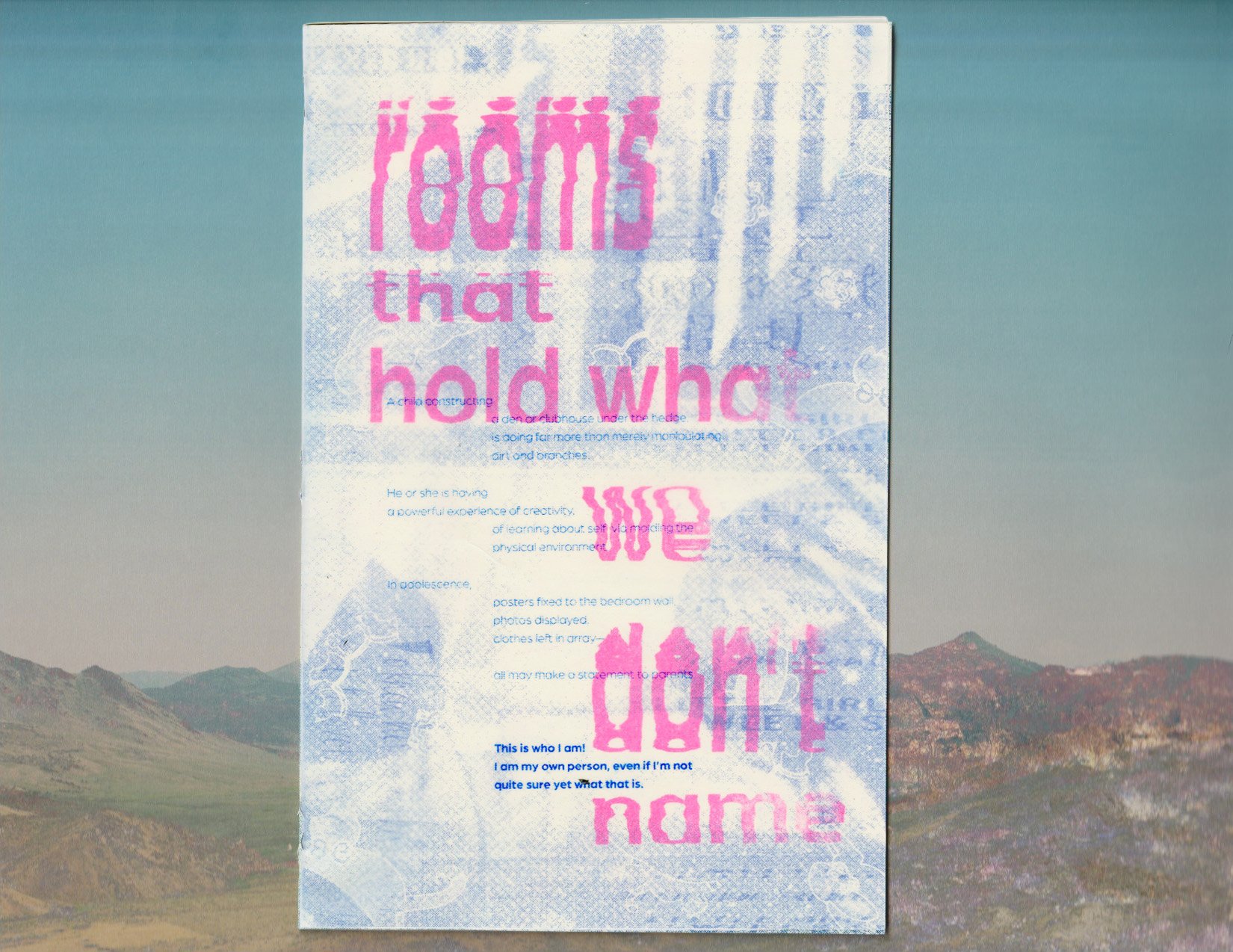
Rooms That Hold What We Don’t Name
risography
collage + illustration
self-ethnography
Exploring the intersection of late ADHD diagnoses in women and the role of childhood environments—particularly their bedrooms, or hidden spaces—as spaces of self-expression and identity formation.
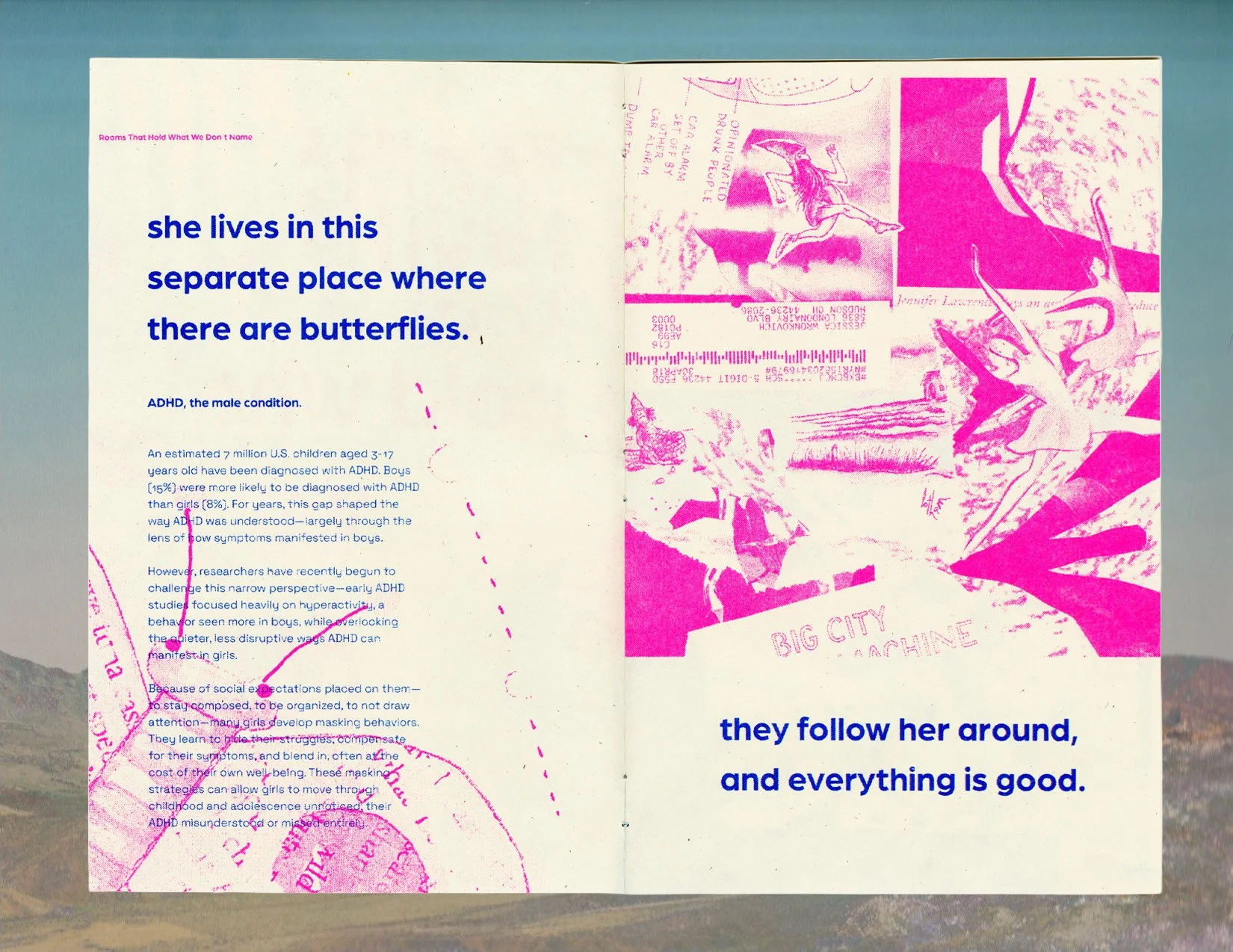
This project aims to identify and analyze potential patterns in masking ADHD symptoms, with a particular focus on how girls may conceal their symptoms in various social situations and express them privately. Additionally, it will explore the influence of role-playing games on the expression and management of ADHD symptoms, as well as their impact on social interactions and self-perception.
The study will also examine the complex role of gender expectations, investigating how societal norms may shape the presentation of ADHD in different genders. By integrating these aspects, this research seeks to provide a new perspective on the recognition and diagnosis of ADHD in girls.
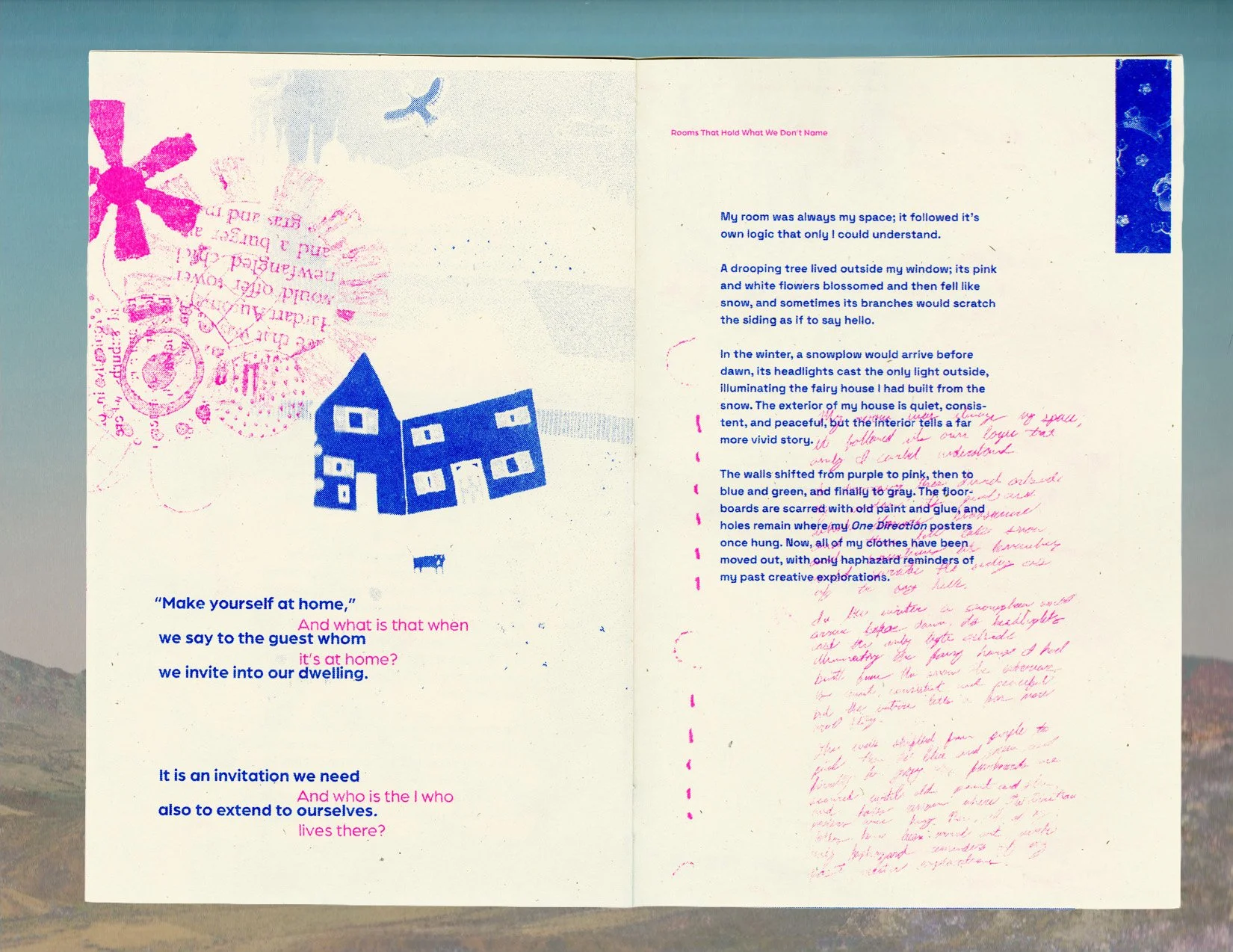
My room was always my space; it followed its own logic that only I could understand.
A drooping tree lived outside my window;
its pink and white flowers blossomed and then fell like snow,
and sometimes its branches would scratch the siding as if to say hello.
In the winter, a snowplow would arrive before dawn,
its headlights cast the only light outside,
illuminating the fairy house I had built from the snow.
The exterior of my house is quiet, consistent,
and peaceful, but the interior tells a far more vivid story.
The walls shifted from purple to pink,
then to blue and green,
and finally to gray.
The floorboards are scarred with old paint and glue,
and holes remain where my One Direction posters once hung.
Now, all of my clothes have been moved out,
with only haphazard reminders of my childhood.